I'm an artist, educator and activist particularly interested in learning from tactics, props and gestures used as protests. I use this blog as a platform to archive and communicate examples of what I call 'gestures of defiance'-exciting, urgent and relevant actions that link protest histories and present radical potentials. On this blog I'm simply compiling and reposting examples I find as they happen. Months may go by with out a post but the blog as an archive is still active.
Showing posts with label social practice. Show all posts
Showing posts with label social practice. Show all posts
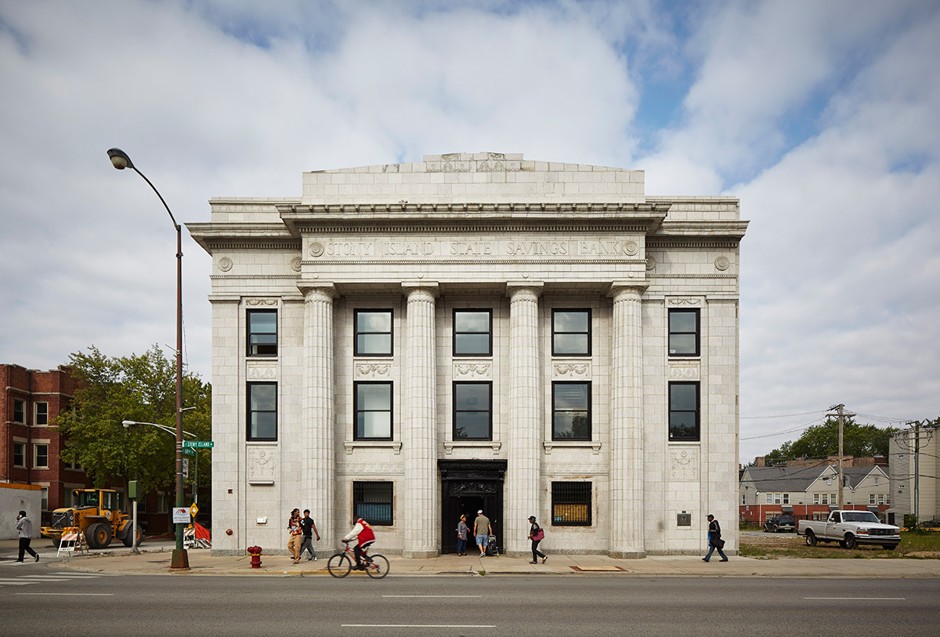
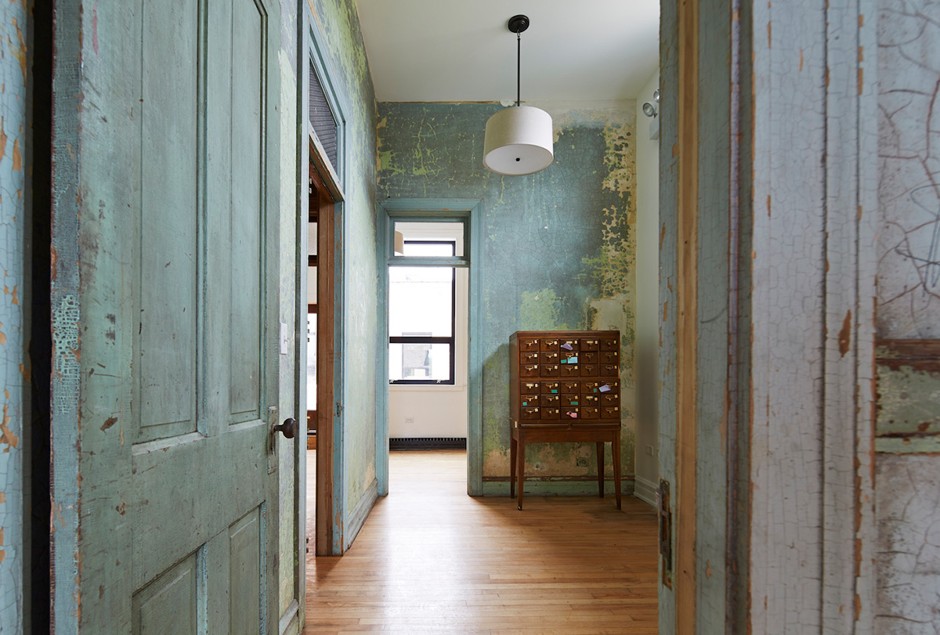
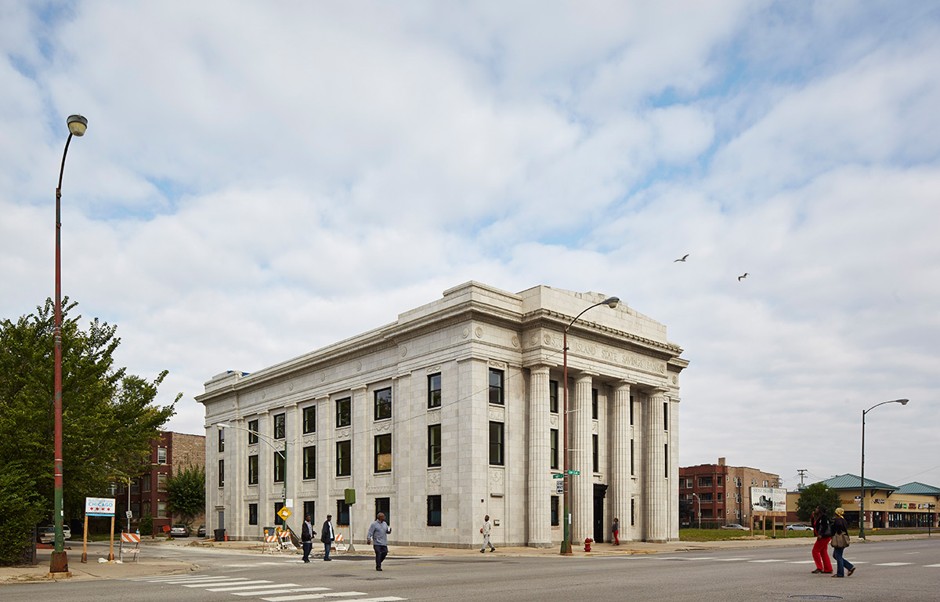
Chicago’s first-ever Architecture Biennial served as a staging ground for wild pavilions, exhibits, and installations. The fair also coincided with the debut of a major new artwork: the Stony Island Art Bank.
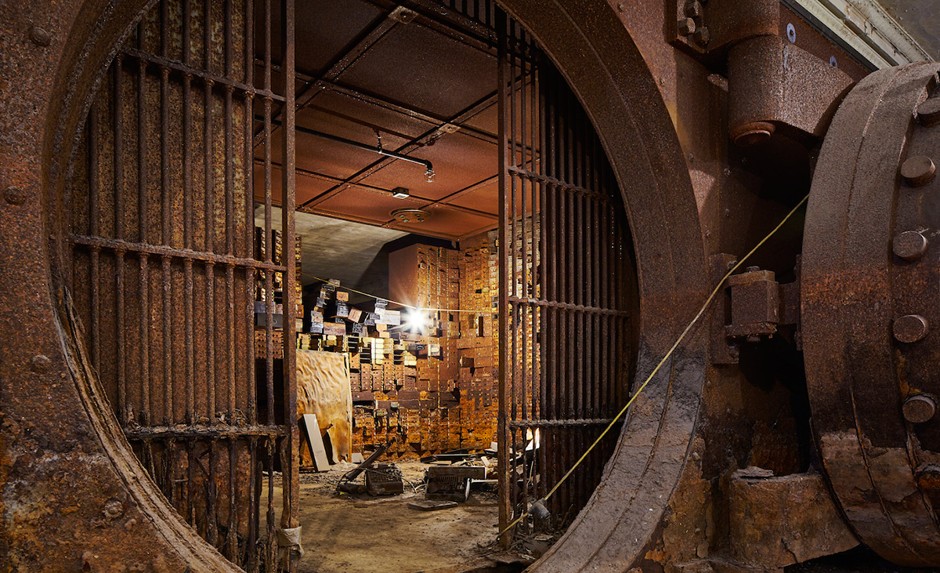
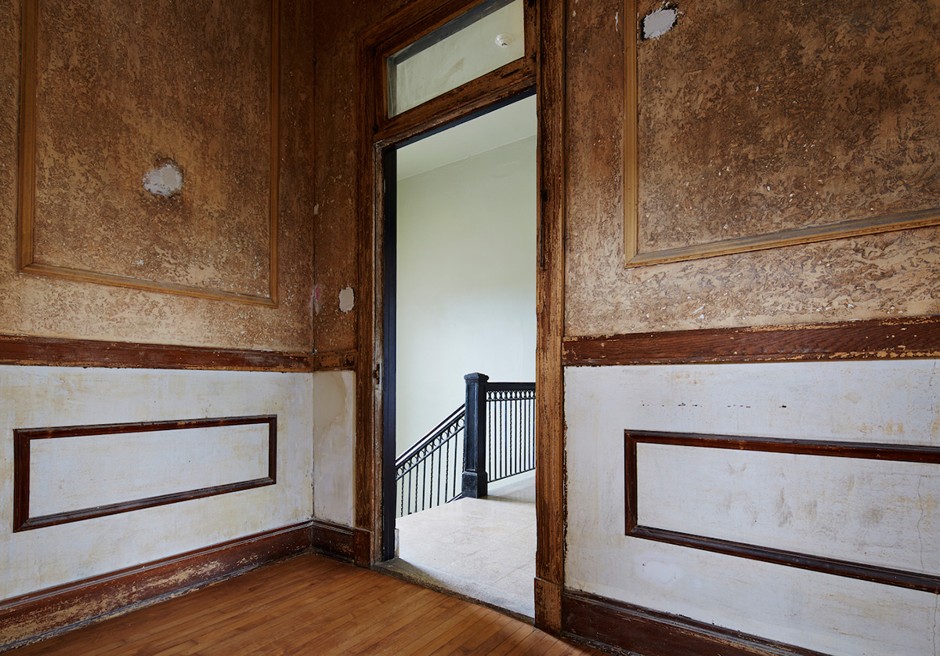
Theaster Gates bought the Prohibition-era Stony Island Trust & Savings Bank building from the city of Chicago for $1. Yes, there was a catch: The artist had to raise the $3.7 million it would take to rehabilitate the building and put it to new use. Gates did the thing that you’re never supposed to do with a historicbuilding: He started pulling it apart, piece by piece. The Stony Island Art Bank, a venue and artwork by Theaster Gates for South Chicago. (Tom Harris/Hedrich Blessing; courtesy of Rebuild Foundation)Since 2013, Gates has been pulling chunks of marble from the building. The artist cut these chunks into “bond certificates” stamped with his signature and the motto, “In ART We Trust.” As Gates told The New York Times back in 2013, he sold 100 marble tablets for $5,000 apiece, as well as some larger slabs that went for $50,000 each. Since they’re artworks whose value stands to appreciate, the marble chunks in fact do work like bonds.
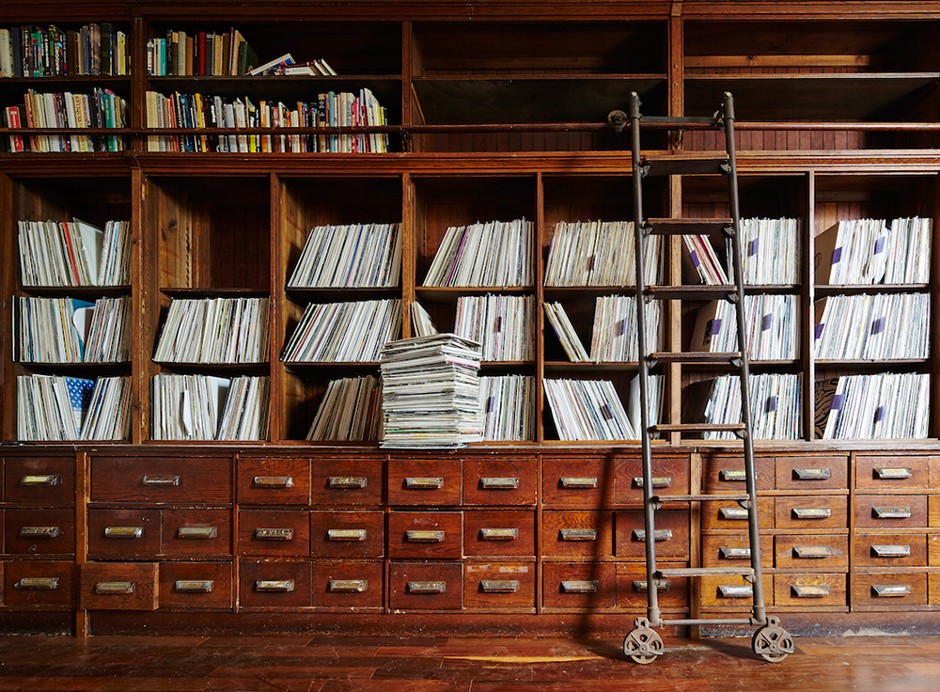
All of Chicago’s South Side was invited to attend the opening of the Stony Island Art Bank earlier this month. (Chicago Architecture Biennial attendees, too.) The building is now an archive for community resources, among them the books and magazines of John H. Johnson, founder of Ebony and Jet and the vast record collection of Chicago’s Frankie Knuckles, the late Godfather of House Music.
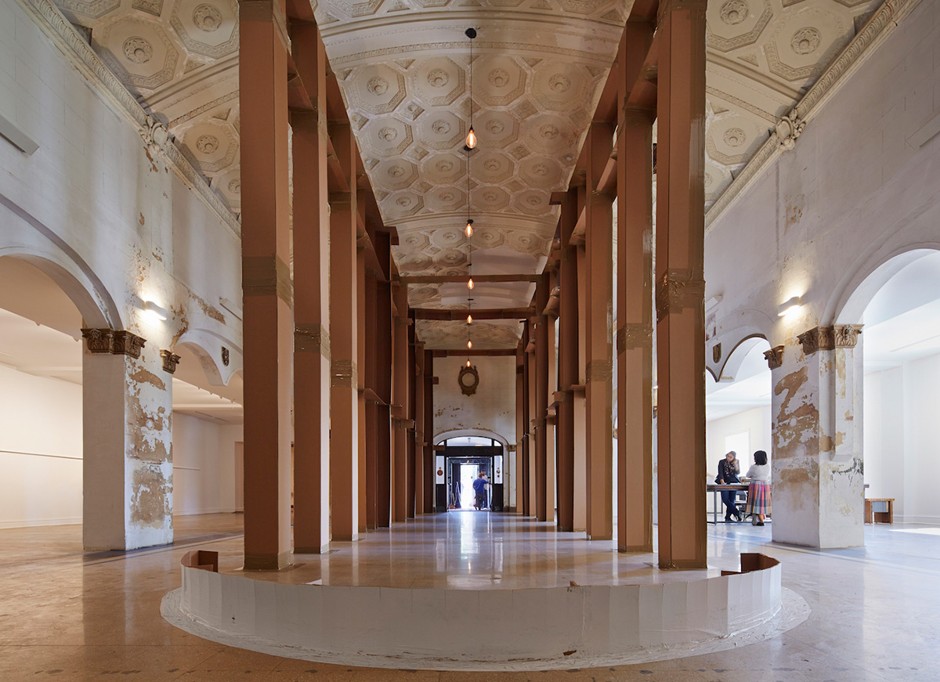
“The concept floats across: this place is about access,” writes Ari Ephraim Feldman in South Side Weekly, noting that the opening was filled with Motown music and dancing as well as a cardboard installation by the Portuguese artist Carlos Bunga. Tom Harris/Hedrich Blessing (courtesy of Rebuild Foundation)Typical Gates. The artist is known for his work in a field called “social practice,”a genre that has no specific medium or form—only an ethos about working with communities or institutions. The lineage of this kind of work is long and distinguished, although in recent years, social practice has gained traction and visibility beyond the art world. Mel Chin, a sculptor, has made work directly engaging the plight of lead-soil contamination in New Orleans. Rick Lowe—who rejects the term—won a MacArthur Foundation genius grant for Project Row Houses, an incubator and community resource center in Houston comprising 22 formerly derelict properties. (Lowe refers to his work as “social sculpture,” for what it’s worth.)
Feldman’s writeup of opening night captures an important dynamic in Gates’ work. “I talked to people at the opening, and the general pattern was this: if you had a ticket you were inspired, and if you had a uniform on you were confused,” he writes. Feldman elaborates:
Ticket: “I love that he’s preserving this music for the younger generations to come and listen to it.” Uniform: “It’s unique. Different. Good for the neighborhood, I guess.” Ticket: “They’re taking depleted buildings in the community and returning them to the jewels they are.” Uniform: “All I know is that it used to be an abandoned building and now it’s not.” Ticket: “This space is multifunctional—it’s just a space waiting to activate.” Uniform: “I don’t know what […] this place is for.”
It’s an insightful observation. The decidedly different ways that people of different stripes relate to the project is what gives it its great dimensionality. It’s one factor that distinguishes the Stony Island Art Bank as an artwork, not just an arts venue. The same goes for the other South Side projects that Gates is creating through his Rebuild Foundation.
In a release, Gates described the project as “an institution of and for the South Side.” The New Yorker says that Gates is “is reshaping the South Side in his image.” That’s not quite right (I say, having never met the man). To my mind, Gates is just teeing up the South Side. It’s the people who complete his installations. The bonds he sold are an investment in them. Tom Harris/Hedrich Blessing (courtesy of Rebuild Foundation)Tom Harris/Hedrich Blessing (courtesy of Rebuild Foundation)Tom Harris/Hedrich Blessing (courtesy of Rebuild Foundation)Tom Harris/Hedrich Blessing (courtesy of Rebuild Foundation)Tom Harris/Hedrich Blessing (courtesy of Rebuild Foundation)Tom Harris/Hedrich Blessing (courtesy of Rebuild Foundation)
Rick Lowe's MacArthur win is also a win for activist art
What the art world can learn from MacArthur "genius" grantee Rick Lowe. (Hint: Stay home)
In 1993, artist Rick Lowe took over nearly two dozen derelict shotgun houses in Houston's Third Ward and, over the course of 20 years, turned them into a thriving cultural center that offers exhibitions, artist residencies and even a program for single moms. Project Row Houses has since become an important symbol of considered urban renewal -- of the way a neighborhood can be transformed for the better without obliterating its roots.
For this work, Lowe received a MacArthur Foundation "genius" grant this week. This is an interesting development for a variety of reasons. For one, there's the fact that Lowe is an artist, not an urbanist or city planner. There is also the fact that he sees Project Row Houses not just as an example of effective community organizing, but as an ever-evolving work of art.
"People don't necessarily embrace the type of work, or the form of the work that I do, as necessarily fitting into the art world," he told the MacArthur Foundation's videographers. (See the video embedded in this post.) "I don't have a problem with it. To talk to people about communities and social context being forms of art is a challenge. ... But I think as time goes on ... other artists like myself will be seen as ... the pioneers of producing work that's expanding the notion of what art can be."
For the field of social-practice art -- that is, art that requires the engagement and participation of its audience -- Lowe's genius grant is a big a win. For decades, many artists have produced works that have blurred the boundaries between art and activism. (Suzanne Lacy's "Three Weeks in May," which chronicled sexual violence in Los Angeles in 1977, is pioneering in this regard.)
But in recent years, there has been a heightened interest in the form. German artist Thomas Hirschhorn created a participatory piece called the "Gramsci Monument" in the Bronx in 2013 that included philosophy lectures, art workshops and musical performances. Cuban-born Tania Bruguera launched a movement in support of immigrants. Seven years ago, an art and social-practice gathering called Open Engagement launched in Saskatchewan, and it is still going strong, with its next iteration to take place in Pittsburgh in the spring of 2015.
Lowe's award, in many ways, helps confer mainstream prestige to the form. But it also highlights the level of commitment that well-produced activist art can demand. Lowe has worked on Project Row Houses since 1993 and lives just a few blocks away from the site. He takes on other projects, but he says he likes to keep much of his focus in Houston. (I interviewed the artist for a story on social practice I did for ARTnews this past spring.)
"You have to spend years developing relationships to be able to do something like this,” he told me at the time. “It’d be an arrogant disregard of a community to come in and think you can grasp all the complexities of a place in a short time.”
This offers a welcome antidote to the art world's relentlessly globe-trotting ways, one in which art is made on the run from Miami to Berlin to Hong Kong. Work like Lowe's is the opposite. It is about observing, learning, considering, and, with the help of others, working to build something new. It is about staying put. The art world could certainly use more of that.